Blog / Nashville Toyota North Used Cars

Blog

All Nashville Toyota North Used Cars Madison Toyota Dealer Nashville Toyota North Madison Used Cars Nashville Toyota New Cars Madison Toyota Service Nashville Toyota North Service Madison New Cars Nashville Toyota Parts Blog
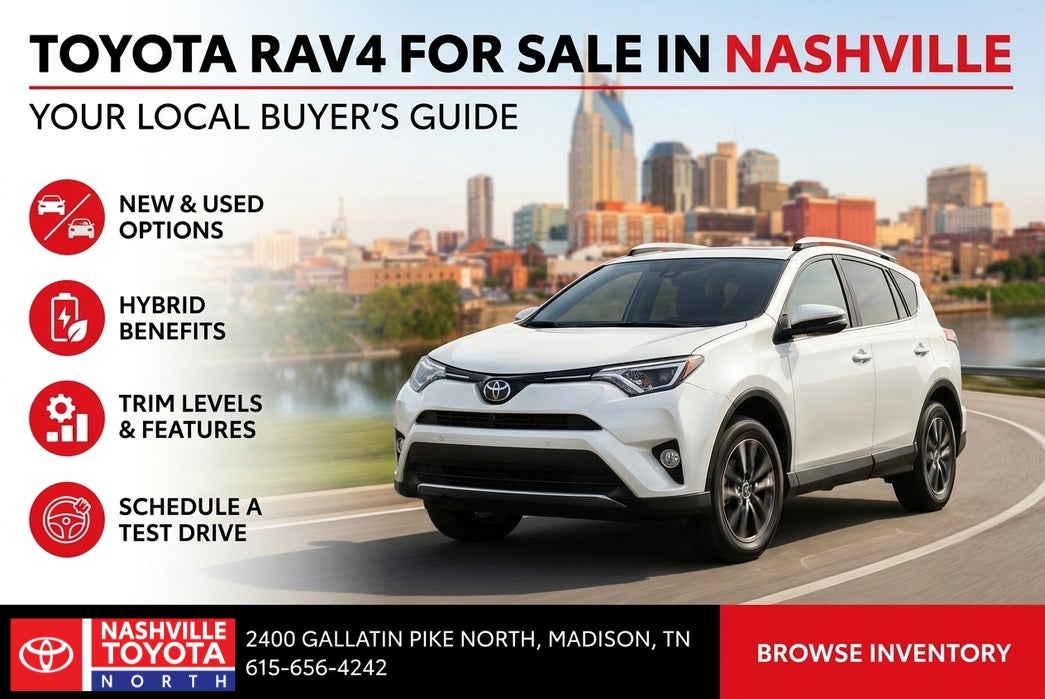
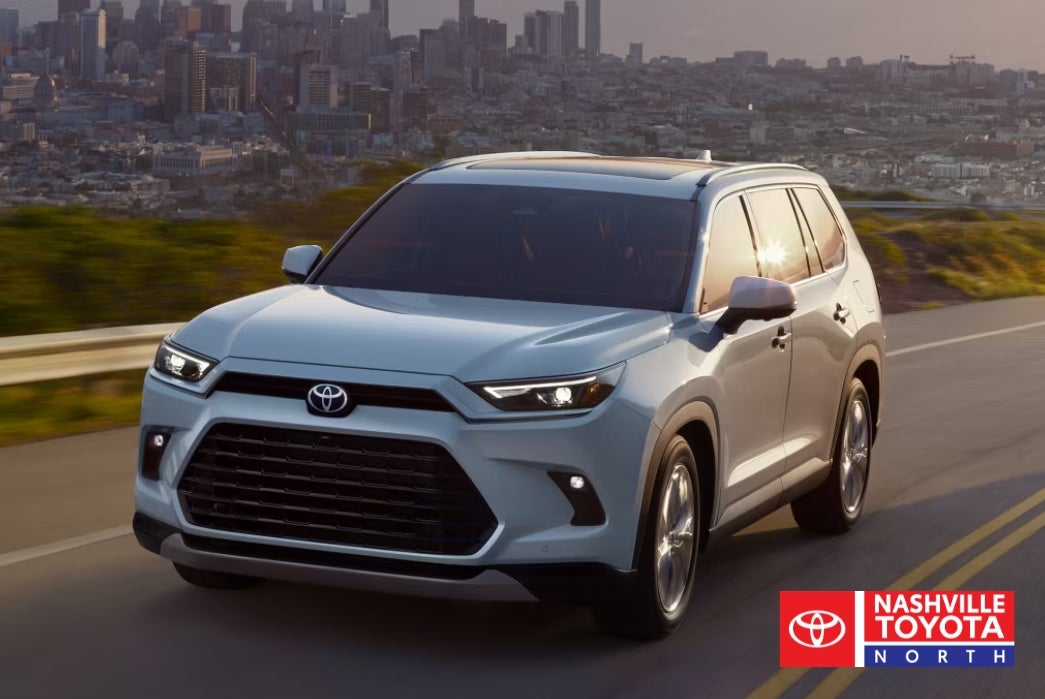
driving on a road above a Nashville skyline, plus icons for new/used options, hybrid benefits, trim features, and scheduling a test drive.

Toyota RAV4 for Sale in Nashville: A Local Buyer's Guide

If you have been searching for a Toyota RAV4 for sale in Nashville, you are shopping for one of the most popular vehicles on the road across Middle Tennessee. The RAV4 shows up in driveways from Madison to Mt. Juliet, and for good reason. It blends everyday practicality with the reliability the Toyota name is known for. This guide walks through why the RAV4 is such a favorite, how to think about new versus used versus certified pre-owned, whether a hybrid or gas model fits your driving, and how to shop for one smartly close to home. Why the Toyota RAV4 Is So Popular in Nashville The RAV4 sits in the compact SUV space, which happens to be exactly what a lot of Nashville area drivers are looking for. It is roomy enough for a growing family, easy to park in tighter spots downtown, and comfortable on longer runs out to Hendersonville or Springfield for the weekend. Its available all-wheel drive gives added confidence when the occasional winter weather rolls through the region. Beyond the practical fit, the RAV4 carries Toyota's reputation for holding up well over time. Shoppers who value dependability tend to keep coming back to it, and that steady demand is part of why you see so many on the road here. If you want a broader sense of how the RAV4 compares to other dependable options in the lineup, our guide to the most reliable Toyota models (https://www.nashvilletoyotanorth.com/blogs/4569/the-most-reliable-toyota-models-which-one-is-right-for-you) is a helpful place to start. Toyota RAV4 for Sale in Nashville: New, Used, or Certified Pre-Owned One of the first decisions you will make is which category of RAV4 makes the most sense for your situation. Each path has its own strengths, and the right answer depends on your budget, your timeline, and how you like to drive. Buying New A new RAV4 gives you the latest features, the newest technology, and the full factory warranty coverage. If you plan to keep a vehicle for many years and want to start with a clean slate, buying new is a natural fit. You can browse the current new Toyota inventory (https://www.nashvilletoyotanorth.com/searchnew.aspx) to see which RAV4 configurations are available right now. Buying Used A used RAV4 can be an appealing route for shoppers who want to stretch their budget or step into a slightly older model. Because the RAV4 tends to hold up well, a well cared for used example can still deliver plenty of dependable miles. Availability of specific model years and mileage ranges changes often, so it helps to check what is on the lot when you are ready. Certified Pre-Owned Certified pre-owned sits between new and traditional used. A certified RAV4 has been inspected and reconditioned to meet Toyota's standards, and it typically comes with added warranty coverage that a standard used car does not include. For drivers who want extra peace of mind without the cost of a brand new vehicle, this can be a comfortable middle ground. Hybrid or Gas: Choosing the Right RAV4 The RAV4 is offered in both traditional gas and hybrid forms, and picking between them comes down to how and where you drive. The hybrid appeals to commuters who spend a lot of time in stop and go traffic around the interstates and surface streets of greater Nashville, since hybrids tend to shine in that kind of city driving. If your daily routine involves plenty of local errands and a regular commute, the efficiency can be a real benefit over time. The gas RAV4 remains a straightforward, familiar choice that many drivers prefer for its simplicity. If your driving leans toward longer highway stretches or you simply like the traditional setup, the gas model is a solid pick. The best way to decide is to think honestly about your typical week behind the wheel and match the powertrain to it. Understanding RAV4 Trims Without Getting Lost The RAV4 comes in several trim levels, and each one bundles a different mix of features, styling, and capability. Rather than getting lost in the details, it helps to think in broad terms about what matters most to you. Some drivers prioritize comfort and technology, while others want a more rugged, adventure ready setup for weekend trips. Trims can differ in things like interior materials, available driver assistance features, wheel styling, and drivetrain options. Since the specifics vary by model year and availability, the smartest approach is to identify your must haves first, then let the sales team point you toward the trims that check those boxes. How to Shop for a RAV4 Locally Shopping close to home has real advantages. Working with a Nashville area dealership means you can see the vehicle in person, ask questions face to face, and get a feel for the service relationship you will have after the sale. Before you visit, it helps to set a rough budget and think through your priorities, such as seating, cargo space, fuel type, and the features you use most. From there, checking online inventory ahead of time lets you arrive with a shortlist rather than starting from scratch. When you are comparing options across Madison, Goodlettsville, Rivergate, and the surrounding suburbs, a local dealership can also walk you through financing, leasing, and trade-in questions in one place. Test-Driving Tips A test drive tells you things a spec sheet never will. When you take a RAV4 out, try to mimic your real routine. Drive on both surface streets and a stretch of highway if you can. Pay attention to visibility, seat comfort, how easily the controls fall to hand, and how the cargo area fits your everyday gear. If you are choosing between hybrid and gas, drive both back to back so the difference is fresh in your mind. Other Strong Toyota Sellers Worth Considering The RAV4 may be the headliner, but it is far from the only Toyota worth a look for Nashville shoppers. A few other consistent favorites are worth putting on your radar. The Corolla is a longtime pick for drivers who want an efficient, easy to own sedan that fits city life. The Camry offers a roomier sedan experience with a comfortable ride for commuters covering more miles. And the Highlander steps up in size for families who need three rows of seating without moving into full size territory. If a compact SUV like the RAV4 turns out to be slightly too small or too large for your needs, one of these models may line up better. Exploring the full lineup helps you feel confident that the vehicle you choose truly fits your life. Ready to Find Your Toyota RAV4 in Nashville? Finding the right RAV4 is easier when you know what you are looking for and have a local team ready to help. Whether you are leaning toward new, used, or certified pre-owned, and whether a hybrid or gas model suits you best, the next step is simple. Reach out to Nashville Toyota North to ask questions, check current availability, or request a quote (https://www.nashvilletoyotanorth.com/contactus.aspx) at your own pace. When you are ready, come see the RAV4 in person and take one for a drive around the neighborhoods you know best.

Toyota vehicle being appraised for trade-in value at a Nashville dealership

What Is My Car Worth? A Toyota Trade-In Value Guide for Nashville Drivers

If you have ever wondered what your car is really worth before shopping for your next vehicle, you are asking one of the smartest questions in the process. For Nashville drivers thinking about an upgrade, understanding your Toyota trade-in value helps you plan your budget and walk into the conversation informed. Trade-in value is not a mystery number pulled from thin air. It reflects real, understandable factors, and knowing them puts you in a stronger position. This guide explains how trade-in value is estimated, what influences it, how to prepare your car, and how a trade can apply toward your next Toyota here in Middle Tennessee. How Trade-In Value Is Estimated At its core, trade-in value is an appraisal of what your current vehicle is worth to a dealership today. Several data points come together to form that estimate, including the year, make, model, and trim of your car, its mileage, its overall condition, and current demand in the market. Appraisers look at how comparable vehicles are selling in the region, then weigh the specific details of your car against that backdrop. Because the market moves over time, the same vehicle can be valued differently from one season to the next. That is why a current appraisal is far more useful than a guess based on what a neighbor got last year. The Difference Between Trade-In and Private Sale It helps to understand that trade-in value and private-sale value are two different things. Selling a car yourself may bring a higher number on paper, but it also means handling listings, fielding calls, meeting strangers, and managing paperwork on your own. A trade-in trades a bit of that top-end number for convenience, since the dealership handles the process and applies the value directly toward your next vehicle. For many Nashville drivers, that simplicity is well worth it. What Affects Your Toyota Trade-In Value Understanding the factors behind an appraisal helps you see your car the way an appraiser does. A few elements carry the most weight. Condition Condition is one of the biggest levers. Appraisers consider both the mechanical health and the cosmetic shape of your vehicle. A car that runs well, has a clean interior, and shows only normal wear tends to appraise more favorably than one with unresolved issues or heavy cosmetic damage. Mileage Mileage tells part of the story of how much life a vehicle has ahead of it. Lower mileage generally supports a stronger value, though a well-maintained vehicle with average mileage can still appraise well. Mileage is always weighed alongside condition and upkeep rather than on its own. Market Demand Demand plays a real role. Popular models, fuel-efficient vehicles, and trusted nameplates often hold value well, and Toyota's reputation for reliability tends to work in an owner's favor. Seasonal trends matter too. Certain vehicle types see stronger interest at different times of year, which can nudge value up or down. Service History A documented service history can support your car's value by showing that it has been cared for. Records of routine oil changes, scheduled maintenance, and completed repairs give an appraiser confidence in how the vehicle has been treated over time. How to Prepare Your Car for Appraisal You cannot change your car's age or mileage, but you can present it at its best. A little preparation goes a long way toward a smooth appraisal. Simple Steps That Help Clean it up: A thorough wash and interior cleaning make a strong first impression and let the vehicle's true condition show. Gather your records: Collect maintenance and repair receipts, along with anything that documents care over the years. Handle small fixes: Address minor, sensible items such as a burned-out bulb, since small details add up. Locate your paperwork: Have your title or loan information and both sets of keys ready. Note the extras: Point out features, recent tires, or upgrades that add value. None of this changes the fundamentals of your car, but it helps ensure the appraisal reflects the vehicle's genuine condition rather than a rushed first look. Applying Your Trade Toward a New or Certified Pre-Owned Toyota One of the most practical benefits of a trade-in is how directly it can support your next purchase. The appraised value of your current vehicle can be applied toward a new Toyota or a certified pre-owned model, which reduces the amount you need to finance or pay. If you are eyeing a brand-new Toyota, your trade can help bring the numbers in line with your budget. If you are leaning toward a certified pre-owned Toyota, a trade pairs nicely with the added confidence those vehicles offer. Not sure which direction fits you best? Our guide on t he difference between certified pre-owned and used vehicles breaks down what sets each apart so you can choose with clarity. Trading in can also simplify the paperwork side of things, since the value rolls into a single transaction rather than juggling a separate sale and purchase. The Local Trade-In Process at Nashville Toyota North For drivers across Madison, Goodlettsville, Hendersonville, Mt. Juliet, and the greater Nashville area, the process is designed to be straightforward and pressure-free. It generally starts with a value estimate, followed by an in-person appraisal where the team confirms the details of your vehicle. You can begin by requesting an estimate of your car's worth through the trade-in value tool, which gives you a helpful starting point before you ever visit. From there, an appraisal confirms the specifics, and you can see how the value applies toward the Toyota you have in mind. Actual figures vary based on your vehicle and current market conditions, so the appraisal is where you get the real, honest number for your car. Throughout the process, the goal is transparency. You are encouraged to ask questions, review how your value was determined, and take the time you need to make a decision that feels right. Ready to Find Out What Your Car Is Worth? Knowing your trade-in value is a smart first step toward your next Toyota, and it costs you nothing to get informed. Whether you are ready to trade today or simply exploring your options, the team at Nashville Toyota North is happy to walk you through it. When you are ready to talk specifics or request a personalized appraisal, reach out to the team and get a clear picture of what your car is worth in today's Nashville market

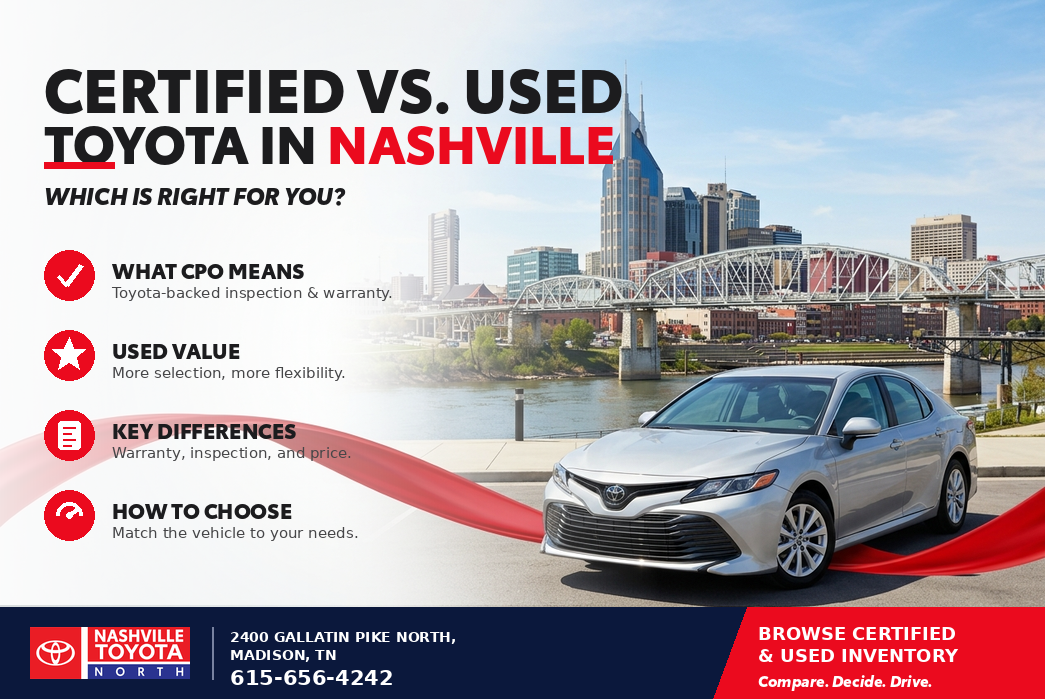
Certified pre-owned Toyota vehicles on display at a Nashville dealership

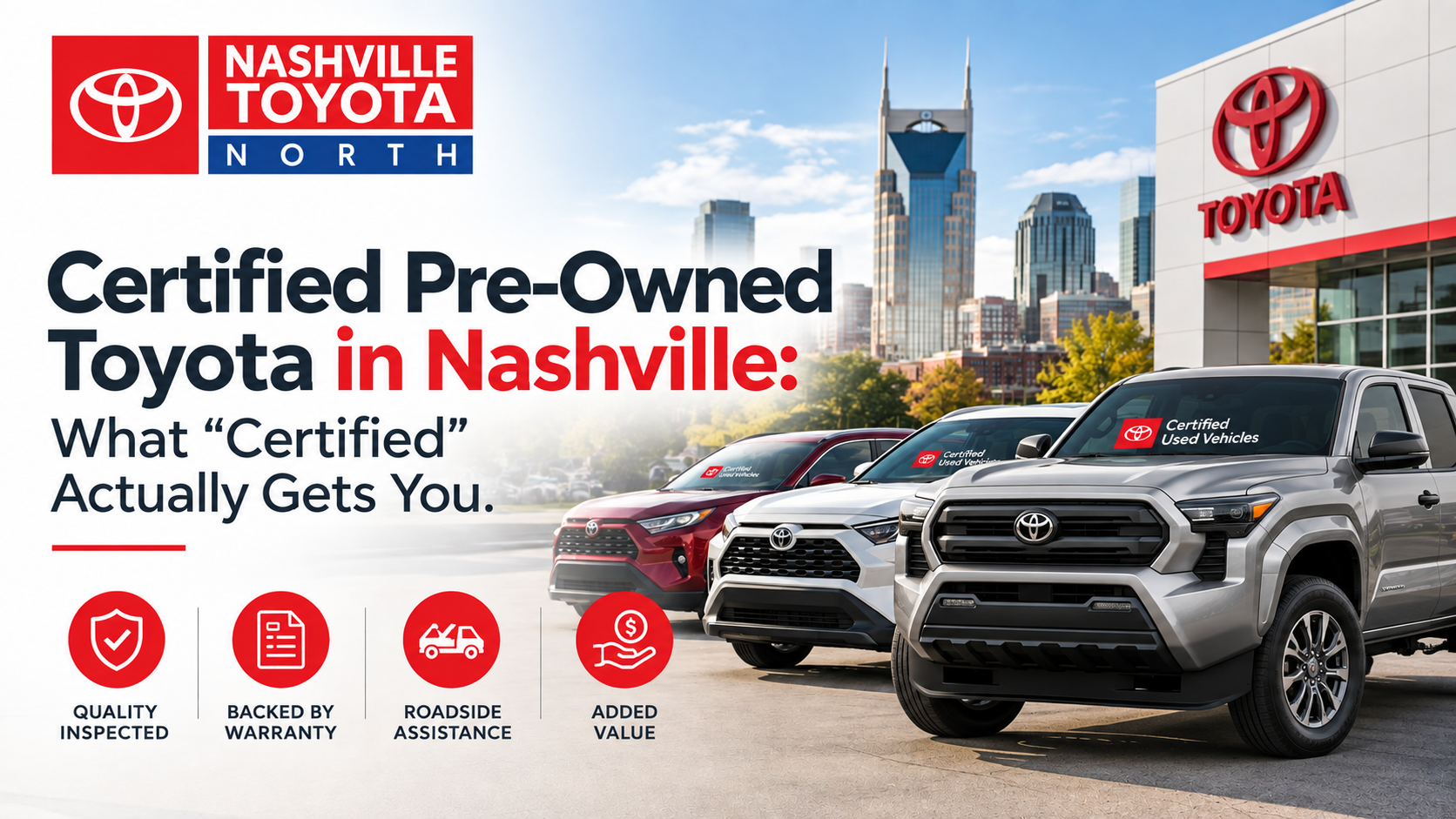
Certified Pre-Owned vs. Used Toyota: Which Is Right for a Nashville Buyer?

Shopping for your next Toyota in Nashville often comes down to one important fork in the road: should you buy a Certified Pre-Owned (CPO) Toyota or a regular used Toyota? Both can be smart, budget-friendly ways to get behind the wheel of a dependable vehicle, but they are not the same thing. Understanding how they differ, and which one fits your priorities, can help you shop with confidence. This guide breaks down what each option means, how they compare, and how to decide which is right for you. What “Certified Pre-Owned Toyota” Actually Means A certified pre-owned Toyota in Nashville is more than just a used car with a nicer label. Toyota runs an official program called Toyota Certified Used Vehicles (TCUV), and only vehicles that meet the manufacturer’s standards can carry that designation. The Toyota Certified Used Vehicles Program To become a CPO Toyota, a vehicle typically must fall within Toyota’s eligibility guidelines and pass a rigorous, manufacturer-defined inspection performed by trained technicians. Here is what the program generally includes: A comprehensive multi-point inspection. Certified vehicles are examined across mechanical, safety, and cosmetic areas, and reconditioned as needed to meet Toyota’s certification standards. Manufacturer-backed warranty coverage. CPO Toyotas come with limited warranty coverage backed by Toyota itself, which is one of the biggest differences between a certified vehicle and a standard used car. For the exact terms, coverage lengths, and what is included, ask our team so you get current, accurate details. Vehicle history transparency. Certified vehicles include a vehicle history report, giving you insight into the car’s background before you buy. Because the certification comes directly from Toyota, a CPO vehicle offers an added layer of reassurance for shoppers who want a used car that has been vetted to the automaker’s specifications. What a Regular Used Toyota Means A standard used Toyota is simply a pre-owned vehicle offered for sale without the formal Toyota certification. That does not mean it is a lesser car. Many used Toyotas are well-maintained, low-mileage vehicles that offer excellent value. How Used Toyotas Are Evaluated At a reputable dealership, used vehicles still go through an inspection process before they are offered for sale. The key distinction is that a non-certified used Toyota does not carry the specific manufacturer-backed certification, its associated warranty coverage, or the standardized TCUV inspection. Used inventory also tends to be more varied: you may find a wider range of model years, mileage levels, trims, and even non-Toyota brands taken in on trade. You can browse the full range of options anytime through our used Toyota inventory in Nashville, which is a great way to see what is currently available. Key Differences Between CPO and Used Toyotas When you compare the two side by side, a few core differences stand out: Certification: CPO Toyotas meet Toyota’s official certification standards; standard used vehicles do not carry that designation. Warranty: CPO vehicles include manufacturer-backed warranty coverage, while used vehicles are typically sold with more limited or as-is terms (ask us about specifics on any given vehicle). Inspection standards: CPO vehicles undergo Toyota’s standardized inspection and reconditioning process. Used vehicles are inspected, but not to that formal, manufacturer-defined program. Selection: Used inventory often offers broader variety in age, mileage, and price points, while CPO vehicles concentrate on newer, lower-mileage models that qualify for the program. Peace of mind vs. flexibility: CPO leans toward added reassurance; used leans toward flexibility and a wider field of choices. Who Each Option Is Best For There is no single “right” answer here. The best choice depends on what matters most to you. A CPO Toyota May Be Right If You Want Added confidence from a manufacturer-backed vehicle Warranty coverage that goes beyond a typical used-car sale A newer, lower-mileage Toyota that has been inspected to Toyota’s standards A more predictable ownership experience, especially if this is your primary vehicle A Used Toyota May Be Right If You Want The widest possible range of choices, including older model years Flexibility to explore different trims, mileage levels, and budgets A dependable second vehicle, a first car for a new driver, or a practical commuter The chance to consider trade-in vehicles from other brands alongside Toyotas How to Decide as a Nashville Buyer Choosing between a CPO and a used Toyota is easier when you weigh a few practical questions: How long do you plan to keep the vehicle? If you want to drive it for many years, the added warranty coverage of a CPO Toyota may appeal to you. For a shorter-term or budget-focused purchase, a used vehicle can make a lot of sense. How important is manufacturer backing? If added reassurance and Toyota-standard inspection are priorities, lean CPO. If flexibility and selection matter more, explore used. What is your driving situation? Daily highway commuters around Nashville, growing families, and first-time buyers all have different needs, and either path can serve them well. Are you also open to a new Toyota? Some shoppers start out considering used vehicles and realize a new model fits their needs. It never hurts to compare against the new Toyota inventory in Nashville before deciding. It also helps to think about long-term dependability. If reliability is high on your list, our guide to the most reliable Toyota models can help you narrow down which vehicles tend to hold up well over time, whether you buy certified or used. Buying a CPO or Used Toyota in Nashville Whichever direction you lean, the buying process is smoother when you work with a franchise Toyota dealership that knows the brand inside and out. Our team can walk you through the differences between a specific certified vehicle and a comparable used one, explain the exact warranty and certification details on any car you are considering, and help you match a vehicle to your budget and driving needs. The Bottom Line A Certified Pre-Owned Toyota offers manufacturer-backed reassurance and standardized inspection, while a used Toyota offers broader selection and flexibility. Both can be excellent choices for Nashville-area drivers. The right pick simply depends on your priorities, timeline, and how you plan to use the vehicle. Ready to see the difference for yourself? Schedule a test drive or contact our team at Nashville Toyota North, and we will help you find the Toyota that fits your life best. Blog metadata (for WordPress entry) Focus keyword: certified pre-owned toyota nashville SEO title (<=60 chars): Certified Pre-Owned vs. Used Toyota in Nashville Open Graph Title (<=60 chars): CPO vs. Used Toyota: Which Is Right for You? Open Graph Description (<=155 chars): Compare Certified Pre-Owned and used Toyotas in Nashville. Learn the key differences and which option fits your budget, needs, and driving plans. Featured image (1045 x 699): 2-cpo-vs-used-toyota-nashville.png Featured image alt text: Certified pre-owned Toyota vehicles on display at a Nashville dealership Featured image title: Certified Pre-Owned vs. Used Toyota in Nashville Featured image caption: Comparing Certified Pre-Owned and used Toyotas at Nashville Toyota North. Featured image description: A lineup of Toyota vehicles at Nashville Toyota North, illustrating the choice between a Certified Pre-Owned Toyota and a regular used Toyota for Nashville-area buyers.

Toyota shopper reviewing auto loan and financing options in Nashville

Toyota Financing in Nashville: Dealer vs. Bank, and How to Prepare

Buying a Toyota is exciting, but figuring out how to pay for it can feel like the harder part of the decision. Should you finance through the dealership or line up a loan at your own bank first? What do lenders actually look at, and how can you walk in ready? If you are a Nashville-area shopper getting close to a purchase, understanding your car financing options ahead of time can make the whole process calmer and clearer. This guide breaks down how Toyota financing in Nashville generally works, how dealer and bank financing compare, and the practical steps you can take before you ever sit down to sign. How Toyota Financing in Nashville Works At its core, financing a vehicle means borrowing money to buy the car now and repaying it over time in monthly installments. An auto loan is secured by the vehicle itself, which is one reason car loans are so widely available. When you finance at a dealership, the dealer works with lending partners on your behalf. In Toyota’s case, that often includes Toyota Financial Services (TFS), the captive lender associated with the brand, as well as banks and credit unions the dealership partners with. You complete a credit application, and the dealership submits it to potential lenders to find a loan offer that fits your situation. The role of Toyota Financial Services Because Toyota Financial Services is tied directly to the manufacturer, it frequently supports promotional programs on eligible new Toyota models. Availability and terms vary by model, credit profile, and timing, so the right move is to ask the finance team what current programs you may qualify for rather than assuming. You can start that conversation through the Nashville Toyota North finance page, which lets you begin the process online before visiting. Dealer Financing vs. Bank Financing One of the most common questions shoppers ask is whether to finance through the dealer or arrange a loan through their own bank. Both are legitimate paths, and each has strengths. Financing through the dealership Dealer financing is convenient because the application and the purchase happen in one place. Since the dealership submits your application to multiple lending partners, it can compare several potential offers at once, which may surface options you would not have found on your own. Manufacturer-supported programs through Toyota Financial Services are also generally accessed this way, so dealer financing is often where brand-specific opportunities live. Financing through a bank or credit union Getting pre-approved through your own bank or a local Nashville credit union before you shop gives you a reference point. You arrive knowing roughly what a lender is willing to offer, which can make comparing the dealership’s offer more straightforward. Some buyers value the existing relationship they have with their credit union, while others simply like having a number in hand. Which is right for you? There is no single correct answer. Many buyers do both: they get pre-approved at a bank or credit union, then let the dealership try to match or improve on it. Comparing offers side by side is the goal, and having more than one option only strengthens your position. For a deeper look at this comparison, our related post, Toyota Auto Loans Explained: Dealer Financing vs. Bank Financing in Nashville, walks through the trade-offs in more detail. What to Prepare Before You Apply A little preparation goes a long way toward a smoother auto loan experience. Here is what tends to matter most. Understand your credit Lenders review your credit history to help determine the terms they can offer. Before applying, it is worth checking your credit report so you know where you stand and can correct any errors. You do not need a perfect profile to explore financing, but knowing your situation helps you set realistic expectations and ask better questions. Think through your down payment A down payment is the amount you pay upfront toward the vehicle. Putting money down reduces the amount you need to borrow, which in turn affects your monthly payment and the total you repay over the life of the loan. Even a modest down payment can be meaningful. Consider what you can comfortably contribute without stretching your budget. Gather your documents Having paperwork ready speeds things up. Lenders commonly ask for proof of income, proof of residence, a valid driver’s license, and insurance information. If you are trading in a vehicle, bring its title or loan details as well. Consider special circumstances Buyers who are early in their credit journey, rebuilding, or facing other challenges still have paths forward. Nashville Toyota North offers a special financing option designed to help more shoppers explore what may be possible. Submitting an inquiry does not obligate you to anything; it simply opens a conversation. Understanding Your Loan Terms Once you receive an offer, a few key terms shape what your car financing will look like day to day. Loan term is the length of time you have to repay. A longer term generally lowers the monthly payment but increases the total interest paid over time; a shorter term does the opposite. Interest rate and APR reflect the cost of borrowing. Your rate depends on factors such as your credit profile, the loan term, and current lending conditions. Monthly payment is what you pay each month, shaped by the amount financed, the term, the rate, and your down payment. The healthiest way to think about it is as a balance: term, down payment, and rate all work together, and the right combination is the one that fits your monthly budget and your longer-term goals. Financing at the Dealership in Nashville When you are ready, the finance team at Nashville Toyota North can walk you through your options, answer questions, and help you understand each offer before you decide. There is no pressure to commit simply because you started an application, and asking questions is always encouraged. Ready to Take the Next Step? Preparing ahead of time turns Toyota financing in Nashville from a stressful unknown into a straightforward part of buying your next vehicle. When you feel ready, explore the new inventory to find the Toyota that fits you, or reach out to the finance team to start the conversation. We are here to help you move forward with confidence.

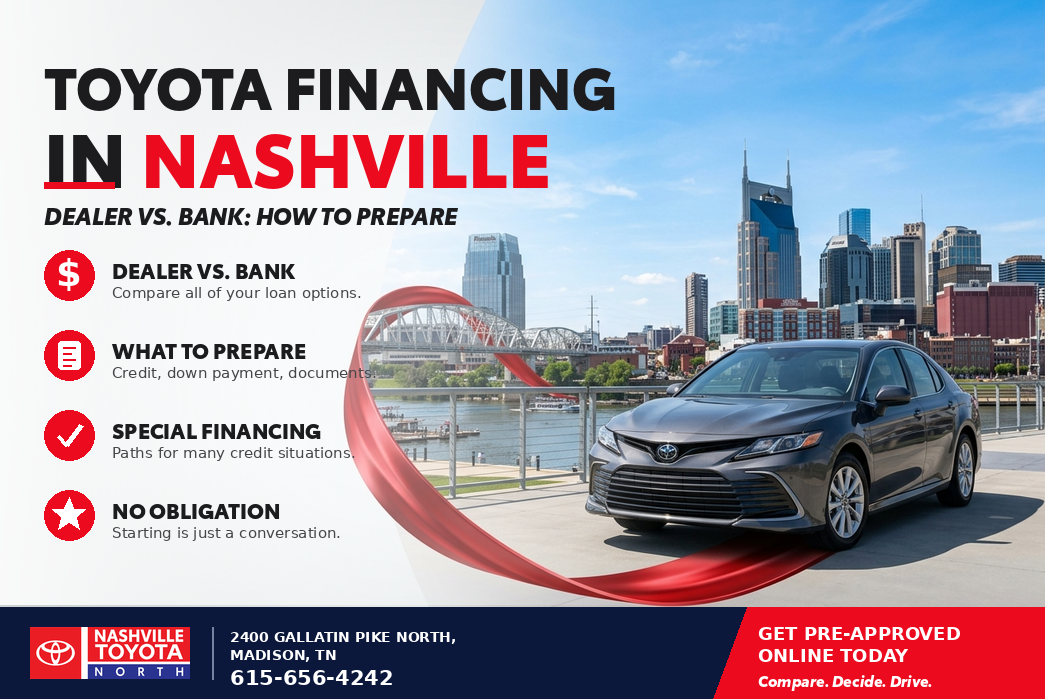
A dark gray Toyota Camry is parked on a road with a city skyline at dusk in the background. A laptop icon with a checkmark is visible in the foreground.

How to Get Approved for a Car Loan in Nashville With Bad Credit

A low credit score feels like a locked door when you need a vehicle – especially in a city like Nashville where getting to work without a car is genuinely hard. Here is the good news: bad credit auto financing is approved every single day, and the process is far more workable than the "guaranteed approval" billboards make it sound. This guide covers what lenders actually look at, what to bring with you, and how to set yourself up for terms you can live with. What Lenders Actually Look At (Beyond Your Score) Your credit score is one input, not the whole decision. Lenders working with credit-challenged buyers weigh your income stability, time at your current job, monthly debt obligations, and down payment just as heavily. A 580 score with two years at the same employer and a reasonable down payment is often a stronger application than a 640 score with three weeks at a new job. Recent on-time payments matter more than old mistakes – lenders want to see which direction you are heading. What to Bring to Speed Up Approval Proof of income (recent pay stubs or, if self-employed, bank statements) Proof of residence (a utility bill works) A valid driver’s license References, if requested Your down payment – even a modest one lowers the lender’s risk and your rate How to Improve Your Terms Before You Sign Pick a vehicle your budget can carry comfortably, not the maximum you can be approved for. A dependable used Toyota – say, a Corolla or Camry from our used inventory or vehicles under $25K – keeps the loan amount small, which keeps the payment manageable and the approval easier. Shorter loan terms cost less in total interest. And here is the move most buyers miss: after 12-18 months of on-time payments, you can often refinance at a meaningfully better rate. Your first loan is a stepping stone, not a life sentence. First-Time Buyers: You Have Options Too No credit is a different problem than bad credit, and it has its own solutions. First-time buyer programs are built for exactly this situation – they weigh income and stability instead of a credit history you have not had time to build. If you are a recent grad or new to credit entirely, ask about these programs specifically when you talk to a finance team. Special Financing at Nashville Toyota North Our finance team at 2400 Gallatin Pike North in Madison works with a network of lenders that includes options for damaged credit, no credit, and past bankruptcies. You can get pre-approved online in a few minutes before you ever visit, or learn more on our special financing page. We serve drivers across the north side of Nashville, from Madison and Rivergate up Long Hollow Pike to Goodlettsville and Springfield. Bad credit does not mean no options – it just means the right plan matters more.

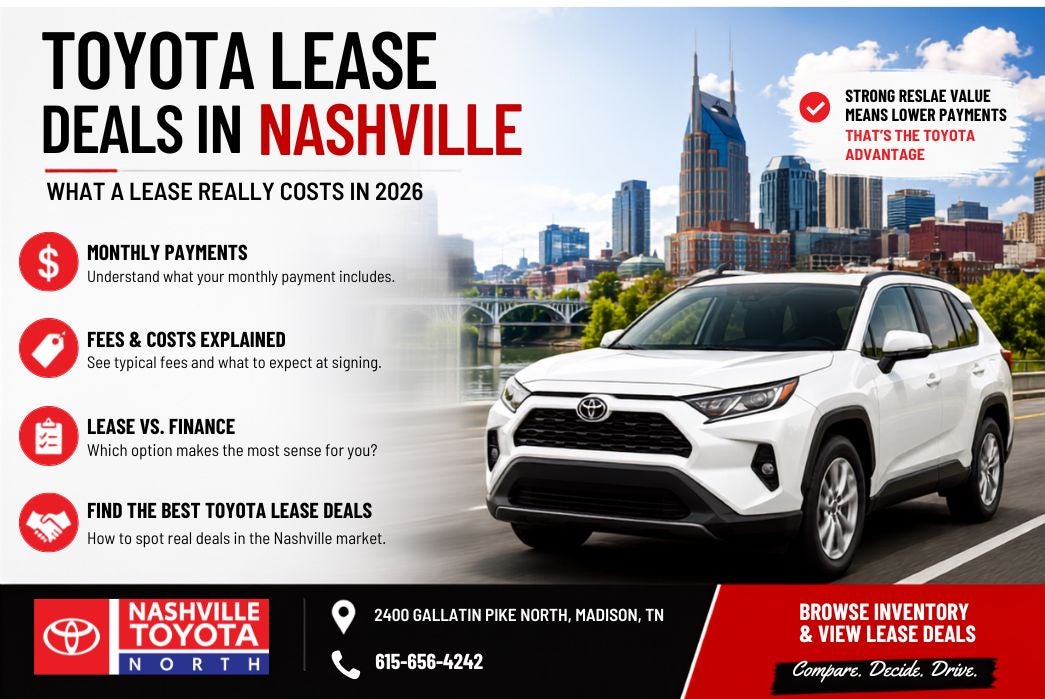
A white Toyota RAV4 is driving on a road with a city skyline in the background. The skyline includes several tall buildings and a bridge over a river.

Toyota Lease Deals in Nashville: What a Lease Really Costs in 2026

If you have been searching for car lease deals around Nashville, you have probably noticed the same thing most drivers do: plenty of ads, not many straight answers. So let’s skip the teaser-rate games and walk through what actually determines your monthly lease payment, what fees show up at signing, and how to tell a genuinely good Toyota lease deal from a cleverly packaged one. What Determines Your Monthly Lease Payment Every lease payment comes down to four numbers: the negotiated price of the vehicle (capitalized cost), the residual value (what the vehicle is projected to be worth at lease end), the money factor (the lease version of an interest rate), and the lease term. Toyota models tend to lease well for one simple reason – strong resale value. A RAV4 or Camry that holds its value means a higher residual, and a higher residual means you are paying for less depreciation each month. A Realistic Cost Breakdown Beyond the monthly payment, plan for these at signing: First month’s payment and an acquisition fee (typically several hundred dollars) Tennessee sales tax, title, and registration Any cap cost reduction (down payment) you choose to make At lease end: a disposition fee if you walk away, and excess mileage charges if you go over your allowance A good rule of thumb for Middle Tennessee drivers: be honest about your mileage before you sign. If your commute runs from Goodlettsville or Hendersonville down Vietnam Veterans Boulevard into the city every day, a 10,000-mile-per-year lease will cost you more in overage fees than the 12,000 or 15,000-mile option would have cost up front. Lease vs. Finance: Which Makes Sense for You Leasing usually wins if you like driving a new vehicle every two to three years, want lower monthly payments, and keep your annual mileage predictable. Financing wins if you drive heavy miles, customize your vehicles, or want to build equity. There is no universally right answer – just the right answer for how you actually drive. If you are weighing both paths, our finance team can run the numbers side by side, and you can explore current leasing options here. How to Spot a Genuinely Good Toyota Lease Deal Compare the total cost of the lease – all payments plus all fees – rather than fixating on the monthly number. A low payment with a large amount due at signing is not a deal; it is a payment moved around. Also check the residual percentage: the higher it is, the less depreciation you are funding. Toyota’s strong residuals are exactly why lease specials on models like the 2026 RAV4 and Camry are consistently competitive in the Nashville market. Lease a Toyota in Nashville Without the Runaround Nashville Toyota North is located at 2400 Gallatin Pike North in Madison, just off Briley Parkway in the Rivergate area – an easy drive for Madison, Goodlettsville, and Mt. Juliet drivers. Browse new Toyota inventory to see what is on the lot right now, then ask us to price your top pick as a lease and a purchase. Ten minutes of comparison will tell you more th

A white SUV is lifted on a car lift inside a well-lit auto repair shop. Another vehicle is visible in the background.

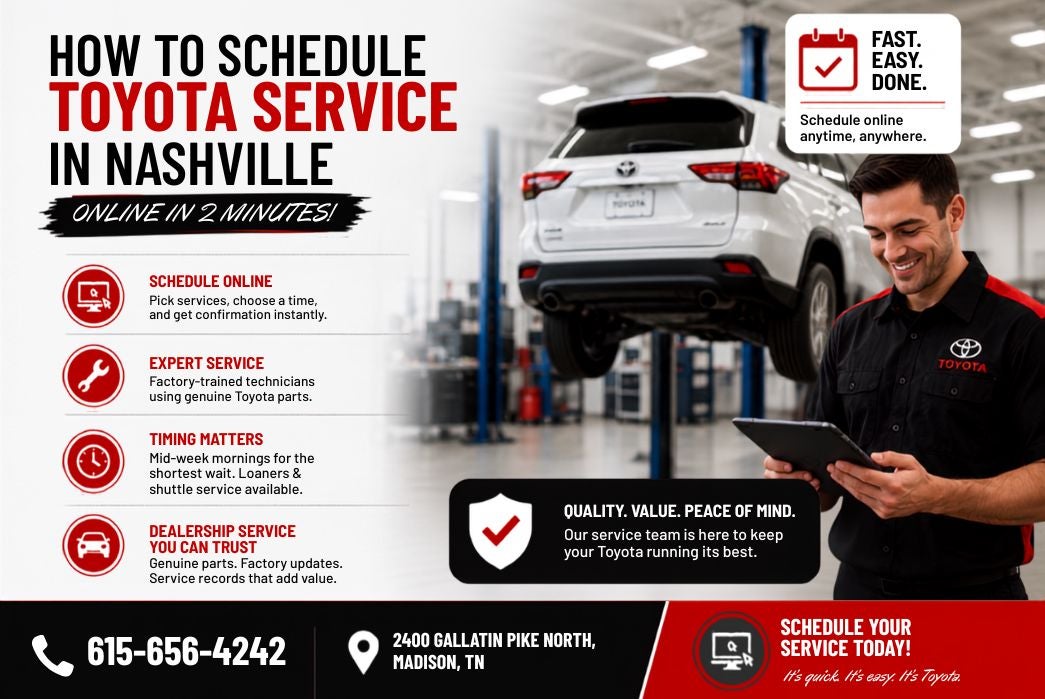
How to Schedule a Toyota Service Appointment in Nashville

Booking Toyota service should take less time than your morning coffee order. Whether you need a routine oil change, a tire rotation before a road trip, or a warning light checked out, here is exactly how to schedule service at Nashville Toyota North – plus what to expect when you arrive and how to time your visit to get in and out fastest. Scheduling Online Takes About Two Minutes The fastest route is our online scheduler. Head to the schedule service page, enter your vehicle’s year and model, pick the services you need (or choose a general inspection if you are not sure what is wrong), and select a date and time that works. You will get a confirmation right away. Prefer to talk it through? Call the service department and our advisors will book it for you – helpful if you are describing a noise or an intermittent issue. What a Toyota Service Visit Includes A standard maintenance visit at our Toyota service center covers more than the line item you booked. Factory-trained technicians perform a multi-point inspection alongside your scheduled service, checking brakes, tires, fluids, battery health, belts, and hoses. That means a $60 oil change can catch a $40 belt problem before it becomes a $900 breakdown on I-65. You will get a clear report of anything that needs attention now versus what can wait – no pressure, just information. When to Book for the Shortest Wait Mid-week mornings (Tuesday through Thursday) are typically the quietest times in any service drive. Mondays carry the weekend backlog, and Saturdays fill up first. If you are coming from Hendersonville or Gallatin down Vietnam Veterans Boulevard, an early appointment also means you beat the Rivergate-area traffic both ways. For bigger jobs, ask about loaner availability or our shuttle when you book. Why Drivers Choose a Dealership Service Center Genuine Toyota parts, technicians who work on Toyotas all day every day, service records tied to your VIN (which helps your resale value), and software updates an independent shop cannot perform. If your Toyota is newer, ToyotaCare may cover your scheduled maintenance entirely – worth checking before you pay out of pocket anywhere. Serving the North Side of Nashville Our service center at 2400 Gallatin Pike North in Madison is minutes from Rivergate Mall, with easy access from Goodlettsville, Old Hickory, and Mt. Juliet via Briley Parkway. Before you book, take thirty seconds to check our current service and parts specials – there is usually a coupon for exactly what you came in for. Ready when you are: schedule your Toyota service appointment here.

A hand is handing over car keys with a Toyota logo to another person's open hand, with a Toyota dealership and Nashville skyline in the background.

How to Maximize Your Car Trade-In Value Before Visiting a Dealership

Trading in your current vehicle is one of the most effective ways to reduce the upfront cost of your next car. But if you walk into a dealership without doing your homework, you could leave hundreds or even thousands of dollars on the table. Understanding how car trade-in value is calculated, what factors affect your offer, and what steps you can take before arriving at the dealership puts you in a much stronger negotiating position. This guide covers all of it. How Dealerships Calculate Car Trade-In Value When a dealership evaluates your vehicle for trade-in, they are not just looking at how clean it is. They are making a business calculation about what they can sell it for and what it will cost them to get it ready for resale. The process typically involves four elements: Market demand: How quickly vehicles like yours are selling in the local market. A popular model in a region where it moves fast will receive a stronger offer than a model with low turnover. Condition assessment: A trained appraiser walks the vehicle, noting any mechanical issues, cosmetic damage, tire wear, interior condition, and the presence of all original equipment. Mileage: Higher mileage generally reduces trade-in value, though the relationship between mileage and value varies by model. A Toyota Tacoma at 80,000 miles, for example, retains considerably more value than most comparable trucks at the same mileage. Market data tools: Dealerships use industry tools like Black Book, Manheim Market Report, and Kelley Blue Book to anchor their offers to current wholesale and retail market data. The resulting offer is what the dealer believes they can wholesale the vehicle for if it does not sell on their lot, with a margin built in for reconditioning, holding costs, and profit. That is the floor. Your job as the seller is to present a vehicle that justifies an offer closer to retail. Factors That Affect Your Car's Trade-In Value Mileage Mileage is one of the most significant variables in trade-in value. Vehicles with fewer miles command higher offers. Most market valuation tools apply depreciation on a per-mile basis. If your vehicle is under 50,000 miles, you are likely in a strong position. Above 100,000 miles, value drops more steeply and some buyers will not consider certain models. Condition Condition is probably the single factor you have the most control over before the appraisal. A vehicle with clean paint, no mechanical issues, a well-maintained interior, and good tire tread will consistently outperform an otherwise identical vehicle in poor condition. Dealers use a condition grading system ranging from rough to excellent, and each grade corresponds to a meaningful difference in offer value. Vehicle History Accident history, title status, and number of previous owners all affect trade-in offers. A vehicle with a clean CARFAX report showing single-owner history and no accidents will be valued more favorably than one with an accident on record, even if the repair was performed well. Pulling your own vehicle history report before the appraisal lets you anticipate what the dealer will see and address any discrepancies in advance. Make and Model Demand Some vehicles simply hold their value better than others. Toyota models consistently outperform the market average in trade-in value due to the brand's reliability reputation and consumer demand. If you are trading in a Tacoma, RAV4, or Camry, you are starting from a position of relative strength compared to brands or models with lower resale performance. Color and Options Neutral colors (white, silver, black, gray) tend to sell faster and command stronger trade-in offers because they appeal to the widest pool of buyers. Unusual colors or stripped-out trim levels with few options may limit your offer. Conversely, popular packages and technology features can add meaningful value to the appraisal. How to Research Your Car Trade-In Value Before the Appraisal Walking into a trade-in appraisal without any market data is one of the most common and costly mistakes car sellers make. Here is how to prepare: Use multiple valuation tools: Kelley Blue Book (kbb.com), Edmunds, and Carmax Instant Offer are the most widely used. Each uses slightly different methodology, so comparing all three gives you a realistic range. Be honest about condition when using online tools: Overestimating your vehicle's condition inflates the online estimate and sets unrealistic expectations. A fair self-assessment will produce a number closer to what you will actually receive. Check dealer listings for similar vehicles: Search for your year, make, model, trim, mileage, and color in your local market to understand what retail pricing looks like. This helps you evaluate whether a trade-in offer is competitive. Get multiple offers: Obtaining an offer from a competing source such as Carmax, Carvana, or another local dealer gives you leverage and a baseline for comparison. Steps to Increase Your Car Trade-In Value There are practical steps you can take in the days before your appraisal that can meaningfully improve the offer you receive. Clean the Vehicle Thoroughly A professional detail is one of the highest-return investments you can make before a trade-in appraisal. Clean vehicles consistently receive stronger initial impressions from appraisers, and a thorough interior and exterior cleaning can easily cost $100 to $200 but influence offers by significantly more. Address Minor Cosmetic Issues Small dents, chips, and scratches are often cheaper to repair than the reduction they cause in your trade-in offer. Paintless dent repair for minor dings can cost $75 to $150 per panel. A small paint chip touchup kit from an auto parts store costs under $20. These investments often return two to three times their cost in a stronger offer. Fix Minor Mechanical Issues Check engine lights are one of the fastest ways to reduce a trade-in offer. Even if the underlying issue is minor, an illuminated warning light signals risk to an appraiser and will reduce your offer by more than the cost of diagnosing and resolving the problem. If your vehicle has deferred maintenance items, addressing them before the appraisal will protect your offer. Gather Your Documentation Bring your title or loan payoff information, vehicle registration, all sets of keys, and any service records you have. A documented maintenance history is evidence of responsible ownership and can support a stronger offer. If you have receipts for recent repairs or upgrades, bring those as well. Remove Personal Items and Aftermarket Accessories Remove all personal items before the appraisal. If you have installed aftermarket accessories that you want to keep, such as a premium stereo or custom wheels, remove them and reinstall the original equipment before the appraisal. Aftermarket modifications rarely add value and sometimes reduce it. Common Trade-In Mistakes to Avoid Negotiating the trade-in and purchase price together: Dealers sometimes bundle these transactions in ways that obscure the true value of each. Ask for a separate trade-in offer before introducing the vehicle you intend to purchase. Accepting the first offer without question: Trade-in offers are often negotiable, particularly if you have competing offers or documentation supporting a higher value. Overlooking the payoff amount: If you still owe money on your vehicle, the net value of your trade-in is the offer minus your remaining loan balance. Make sure you know your payoff amount before arriving. Waiting too long to trade in: As vehicles accumulate mileage and age, trade-in value declines. If you know you are planning to trade within the next six months, doing it sooner often produces a stronger offer. How to Apply Your Trade-In Toward a New Toyota Once you have a trade-in offer you are satisfied with, the process of applying it toward a new vehicle is straightforward. The offer amount reduces the capitalized cost (on a lease) or the purchase price (on a financed or cash transaction), which directly lowers either your down payment requirement or your monthly payment. If you owe less on your current vehicle than the trade-in offer, the positive equity is applied to your new vehicle. If you owe more, the difference is negative equity that typically rolls into the new loan, so it is important to understand your payoff situation before negotiating. The finance team at Nashville Toyota North can walk you through the math on how your trade-in applies to any specific new or pre-owned vehicle you are considering. Get Your Trade-In Appraised at Nashville Toyota North Nashville Toyota North offers trade-in appraisals with no obligation to purchase. Whether you are ready to buy now or simply want to know what your vehicle is worth in the current market, an appraisal is a smart first step. Bring your vehicle in during business hours, and the appraisal team will evaluate it against current market data and provide a written offer. If you are shopping for a new or certified pre-owned Toyota at the same time, the trade-in amount will be applied directly to your deal.
A white Toyota SUV drives on a road with a city skyline in the background during sunset.

Financing vs Leasing a Car: Which Option Is Better for You?

One of the most common questions car shoppers face is whether to finance a purchase or lease a vehicle. Both options get you behind the wheel of a new car, but they work very differently and serve different financial goals. The right choice depends on how you use your vehicle, what matters most to your budget, and how you feel about long-term ownership. This guide breaks down exactly how financing and leasing work, compares them side by side, and helps you determine which option makes the most sense for your situation. What Is Car Financing? When you finance a car, you are borrowing money to purchase the vehicle outright. You make monthly payments to a lender, typically a bank, credit union, or the manufacturer's finance arm, until the loan is paid off. Once the loan is complete, you own the vehicle free and clear. Financing is the most common way Americans buy cars. The monthly payment is determined by the vehicle price, your down payment, the loan term (typically 36 to 72 months), and your interest rate based on your credit profile. Because you are paying down the full purchase price of the vehicle, finance payments are generally higher than lease payments for the same model and term. However, once the loan is paid off, you have no further monthly obligation unless you choose to take out another loan on a new vehicle. What Is Car Leasing? When you lease a car, you are paying for the right to use it for a set period, typically 24 to 48 months. You do not own the vehicle. At the end of the lease term, you return it, purchase it at a pre-agreed residual value, or start a new lease on a different model. Lease payments are calculated based on the vehicle's expected depreciation during the lease term, plus interest and fees. Because you are only paying for the depreciation rather than the full vehicle value, monthly payments are almost always lower than a comparable loan payment. Leases also come with built-in mileage limits, typically between 10,000 and 15,000 miles per year. Exceeding these limits results in per-mile charges at lease end. Key Differences: Financing vs Leasing at a Glance Ownership: Financing builds toward full ownership. Leasing does not unless you buy out the vehicle at lease end. Monthly Payments: Lease payments are generally 20 to 40 percent lower than loan payments for the same vehicle. Mileage: Financed vehicles have no mileage restrictions. Leased vehicles come with annual mileage caps and overage fees. Customization: You can modify a financed vehicle however you choose. A leased vehicle must be returned in original condition. Equity: Loan payments build equity. Lease payments do not, since you never own the vehicle. End-of-term options: At loan payoff you own the car outright. At lease end you return it, buy it, or start over. Maintenance costs: With financing, you eventually carry repair costs beyond the warranty period. Leasing keeps you within the warranty window for the life of the agreement. When Financing a Car Makes More Sense Financing is typically the stronger choice in the following situations: You drive more than 15,000 miles per year. Mileage overage fees can make leasing expensive if you have a long commute or travel frequently by car. You plan to keep the vehicle long-term. If you drive cars until 150,000 or 200,000 miles, financing and owning outright gives you years of payment-free driving once the loan is paid. You want to build equity. Every loan payment reduces what you owe. A financed vehicle can be traded in or sold at its market value, which often offsets the cost of a new vehicle. You prefer to customize your vehicle. Lift kits, aftermarket wheels, and modifications are not compatible with a lease agreement. Your credit profile qualifies you for a low interest rate. If you can secure a 0 percent or near-zero APR offer, financing becomes extremely cost-effective over time. For buyers who see a car as a long-term investment and want eventual payment freedom, financing is the better path. When Leasing a Car Makes More Sense Leasing tends to be the smarter financial move under these conditions: You want a new car every two to three years. Leasing makes it easy to upgrade without the hassle of selling or trading in a vehicle. You drive a predictable, moderate number of miles. If you commute locally and rarely exceed 12,000 to 15,000 miles per year, you are unlikely to face overage charges. Lower monthly payments are a priority. The same budget that gets you a base trim financed vehicle might get you a higher trim leased vehicle. You want to stay under warranty at all times. Since most leases run 24 to 36 months and align with manufacturer warranties, major repairs are typically covered for the full lease period. You use the vehicle for business purposes. Leased vehicles used for business may qualify for certain tax deductions. Consult a tax professional for specifics. For buyers who prioritize driving a newer vehicle, keeping payments manageable, and avoiding large repair bills, leasing offers a compelling advantage. The True Cost Comparison: An Example To illustrate the difference, consider a Toyota RAV4 with an MSRP of $32,000. If you finance it over 60 months at 6 percent APR with a $3,000 down payment, your monthly payment would be approximately $560. Over five years, you pay roughly $36,600 total and own the vehicle at the end. If you lease the same RAV4 for 36 months with a competitive money factor and no down payment, your monthly payment might be approximately $350 to $400. Over three years, you pay roughly $12,600 to $14,400 and return the vehicle. If you then lease another RAV4, the cycle continues with new payments but also a new vehicle and warranty. Neither option is universally cheaper. What matters is what you value most: ownership and equity, or flexibility and lower monthly costs. Can You Switch from a Lease to a Purchase? Yes. Most lease agreements include a buyout option at lease end, allowing you to purchase the vehicle at its predetermined residual value. If the vehicle's actual market value is higher than the residual at that point, buying it out can be a smart financial move. Some buyers who start with leasing transition to financing after a few cycles because they have become comfortable with a model and want to own it long-term. There is no rule that locks you into one approach permanently. How to Decide: A Simple Framework When weighing financing vs leasing a car, ask yourself these four questions: How many miles do I drive each year? Over 15,000 means financing is likely the better fit. How long do I want to keep this vehicle? More than four years points toward financing. Two to three years points toward leasing. Is monthly payment or total cost more important to me right now? Leasing wins on monthly payment. Financing wins on long-term total cost in most scenarios. Do I want to own my vehicle or simply use it? Ownership goals point toward financing. Flexibility goals point toward leasing. Once you answer those honestly, the right direction usually becomes clear. If you are still weighing both options, the finance team at Nashville Toyota North can run side-by-side numbers on any model to show you the exact cost difference for your specific situation.

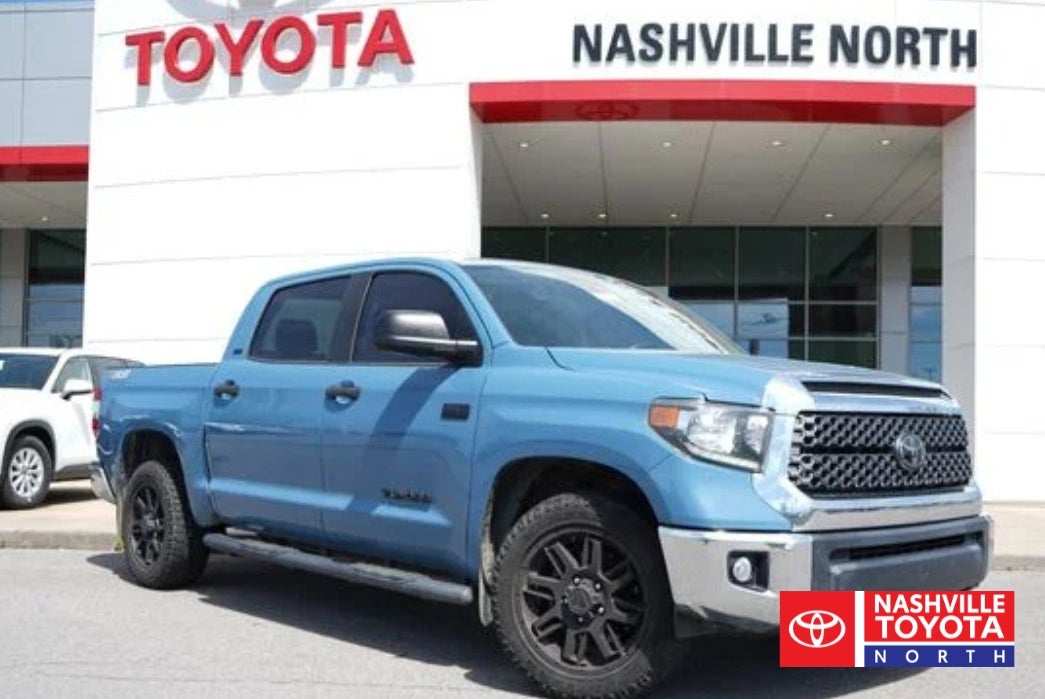
A blue Toyota Tundra pickup truck parked in front of a Toyota dealership with "Nashville North" signage.

What Is a Certified Pre-Owned Toyota and Is It Worth It?

Shopping for a used car can feel like navigating a minefield. You want the savings that come with a pre-owned vehicle, but you also want confidence that the car you are buying will not become a source of expensive problems. That is exactly the gap that Toyota's Certified Pre-Owned program is designed to fill. A certified pre-owned Toyota is not just a used car with a badge on it. It is a vehicle that has been evaluated, reconditioned, and backed by warranties that bring it significantly closer to a new car buying experience. This guide explains what the Toyota CPO program actually covers, how it compares to buying a regular used car or a new vehicle, and whether the additional cost is worth it for your situation. What Makes a Toyota Certified Pre-Owned Vehicle Different? Toyota's CPO program sets specific eligibility requirements that a vehicle must meet before it can carry the certified designation. These are not cosmetic standards. They are substantive criteria designed to ensure the buyer receives a vehicle with verified condition and documented history. To qualify as a certified pre-owned Toyota, a vehicle must generally meet the following baseline requirements: No older than six model years at the time of certification Fewer than 85,000 miles on the odometer Clean title history with no structural damage or salvage designation Must pass a comprehensive 160-point vehicle inspection Must pass a CARFAX Vehicle History Report review Vehicles that do not pass these standards cannot be certified, regardless of how well they may appear visually. This filtering process eliminates a significant portion of available used inventory, ensuring that certified vehicles represent the upper tier of what is available on the pre-owned market. The Toyota CPO 160-Point Inspection: What It Actually Covers The 160-point inspection is the core of the certified pre-owned Toyota program. A Toyota-trained technician evaluates the vehicle across every major system. Here is an overview of what the inspection covers: Engine and Drivetrain Technicians inspect the engine for leaks, unusual wear, and proper fluid condition. Transmission function, differential condition, and driveshaft integrity are also evaluated. Any components that do not meet Toyota's standards must be repaired or replaced before certification is granted. Braking System Brake pad thickness, rotor condition, brake fluid quality, and the performance of the anti-lock braking system are all reviewed. Vehicles with brake components below the minimum specification are brought back into standard before certification. Electrical Systems Battery health, charging system output, lighting, and electronics are tested. This includes infotainment systems, backup cameras, and safety features like Toyota Safety Sense, where equipped. Interior and Exterior Condition While CPO vehicles may show normal signs of use, they must meet standards for seat condition, dashboard integrity, glass clarity, and body panel condition. Significant cosmetic damage that was not repaired disqualifies a vehicle from certification. Tires and Wheels Tire tread depth must meet minimum requirements. Wheels are inspected for damage. Mismatched or worn tires are replaced before certification is granted. Certified Pre-Owned vs Used vs New: How They Compare Understanding where a certified pre-owned Toyota sits relative to a standard used vehicle or a brand-new model helps clarify whether CPO is the right choice for you. New Toyota A new vehicle offers the latest features, full factory warranty coverage, and the ability to customize your order. You pay a premium for this, and you accept the steepest depreciation curve since new vehicles lose a significant portion of their value in the first two to three years of ownership. Certified Pre-Owned Toyota A CPO Toyota has already absorbed the sharpest depreciation hit, making it a better value per dollar in many cases. You get verified condition, warranty protection, and roadside assistance without paying the new car premium. The trade-off is less flexibility in color and feature combinations. Standard Used Toyota A non-certified used vehicle can offer even lower upfront cost, but it comes without structured inspection requirements or warranty coverage unless the seller provides one separately. The risk is higher, and the due diligence required before purchase falls entirely on the buyer. Toyota CPO Warranty Coverage One of the most compelling reasons to choose a certified pre-owned Toyota over a standard used vehicle is the warranty coverage that comes with the program. Toyota's CPO warranty includes: 12-month or 12,000-mile comprehensive warranty from the date of certified purchase, whichever comes first 7-year or 100,000-mile powertrain warranty from the original in-service date, covering engine, transmission, and drivetrain components One year of Toyota Roadside Assistance from the date of certified purchase, including towing, battery jump-start, flat tire assistance, and lockout service The powertrain warranty is particularly significant. For a vehicle purchased at 45,000 miles, for example, you could still have meaningful powertrain coverage remaining on a 100,000-mile policy. This is protection you simply do not get with a standard used vehicle purchase. Toyota CPO vehicles also qualify for Toyota Financial Services financing programs, which sometimes include competitive rates comparable to new vehicle offers. Which Toyota Models Are Available as CPO? Any Toyota model that meets the age and mileage requirements can qualify for CPO certification after passing the inspection. In practice, the most commonly available certified pre-owned Toyota models include: Toyota Camry: One of the most frequently traded-in vehicles, making CPO Camrys widely available across trim levels. Toyota RAV4: High demand as a new vehicle translates to good CPO availability as leases and trades come in. Toyota Corolla: Excellent CPO value given the model's strong long-term reliability profile. Toyota Tacoma: CPO Tacomas are among the most sought-after certified trucks on the market given their exceptional resale value and limited depreciation. Toyota Highlander: A great option for families who want three-row capability at a lower price point than a new model. Toyota 4Runner: Because the 4Runner holds its value so well, CPO examples still carry meaningful warranty coverage even at higher mileage. Is a Certified Pre-Owned Toyota Worth the Extra Cost? CPO vehicles typically cost more than comparable non-certified used vehicles. The premium varies by model, market conditions, and the specific vehicle, but it is not uncommon to see a $1,000 to $3,000 difference between an equivalent CPO and non-CPO used car. Whether that premium is worth it depends on your risk tolerance and your ability to absorb unexpected repair costs. Here is a straightforward way to evaluate it: If you are buying a vehicle in the $20,000 to $35,000 range and could not comfortably absorb a $3,000 to $5,000 transmission repair, the CPO warranty has clear financial value. If you have a trusted mechanic who can perform a thorough pre-purchase inspection on a non-certified vehicle, and you have a financial cushion for potential repairs, the CPO premium may not be necessary. If you are financing the purchase, the lower monthly payment difference between CPO and standard used may be small enough that the warranty coverage is a clear win. For most buyers, especially those financing a vehicle without a large repair reserve, a certified pre-owned Toyota represents strong value relative to the protection it provides. Find Your Certified Pre-Owned Toyota at Nashville Toyota North Nashville Toyota North maintains an active inventory of certified pre-owned Toyota vehicles inspected and backed by Toyota's official CPO program. If you are in the market for a reliable used vehicle with warranty protection and documented history, the CPO selection is worth a close look before making a final decision. The sales team can walk you through current inventory, review the vehicle history report with you, and explain exactly what warranty coverage applies to any specific vehicle you are considering.
Three people in business attire are looking at a red folder with documents in a dealership.

How to Lease a Car for the First Time: A Complete Step-by-Step Guide

Leasing a car for the first time can feel intimidating, especially when you encounter unfamiliar terms like money factor, residual value, and cap cost reduction. The good news is that once you understand how a car lease works, the process is straightforward and often results in lower monthly payments than financing a purchase. This guide walks you through everything you need to know before you walk into a dealership, so you can negotiate with confidence and choose a lease structure that fits your budget and lifestyle. What Is a Car Lease and How Does It Work? A car lease is a long-term rental agreement between you and a dealership or finance company. Rather than purchasing the vehicle outright, you pay for the right to use it for a set period, typically 24 to 48 months, with a fixed number of miles per year. At the end of the lease term, you return the vehicle, purchase it at a predetermined price, or lease a new model. You never own the car during the lease unless you choose to buy it at the end. The monthly lease payment is calculated based on how much the car is expected to depreciate during your lease term, plus interest and fees. Because you are only paying for depreciation rather than the full vehicle price, lease payments are typically lower than loan payments for the same vehicle. Key Lease Terms Every First-Time Lessee Should Know Before signing anything, make sure you understand these essential terms: Capitalized Cost (Cap Cost): This is the negotiated selling price of the vehicle. Like a purchase price, this is negotiable. A lower cap cost means lower monthly payments. Residual Value: The estimated value of the vehicle at the end of the lease term, expressed as a percentage of the MSRP. A higher residual value generally means lower monthly payments. Money Factor: This is the interest rate on your lease, expressed as a small decimal (e.g., 0.00125). Multiply it by 2,400 to convert it to an approximate APR. This figure is not always disclosed upfront, so ask for it. Mileage Allowance: Most leases allow 10,000 to 15,000 miles per year. Driving over your allotted miles results in per-mile overage charges at lease end, typically between 15 and 25 cents per mile. Gap Coverage: If your leased vehicle is totaled or stolen, gap coverage pays the difference between what your insurance pays and what you owe on the lease. Many leases include this automatically. Disposition Fee: A fee charged at the end of the lease if you choose not to purchase the vehicle or lease another from the same brand. It typically ranges from $300 to $400. Is Leasing Right for You? Questions to Ask Yourself Leasing makes the most sense in specific situations. Consider the following questions before deciding: Do you prefer driving a new vehicle every two to three years? Leasing makes it easy to upgrade at the end of each term. Do you drive fewer than 12,000 to 15,000 miles per year? Staying within the mileage limit is one of the most important factors in making a lease financially beneficial. Do you take good care of your vehicles? Lease agreements require you to return the car in good condition. Excess wear and tear can result in additional charges at turn-in. Is your monthly budget the primary concern? Lease payments are almost always lower than loan payments for the same vehicle and loan term. Do you itemize deductions if you use the car for business? Leased vehicles used for business purposes may offer additional tax advantages worth discussing with your accountant. If most of your answers point toward yes, leasing is likely a strong fit. If you drive high miles, prefer to own outright, or want the freedom to modify your vehicle, purchasing may serve you better. Step-by-Step: How to Lease a Car for the First Time Step 1: Choose the Right Vehicle Not all vehicles lease equally. Models with high residual values and manufacturer lease incentives will offer the best monthly payments. Toyota consistently offers competitive lease programs on popular models like the Camry, Corolla, RAV4, and Tacoma. Research current lease specials before deciding on a model. Step 2: Check Your Credit Score Your credit score directly affects your money factor, which is the interest rate built into your lease payment. A score above 700 typically qualifies you for tier-one rates, meaning the lowest available money factor. Before visiting a dealership, pull your credit report, address any errors, and know where you stand. Step 3: Research Current Lease Offers Manufacturers publish monthly lease programs through their captive finance arms, like Toyota Financial Services. These programs set the residual value and money factor for each model. Checking these numbers before you negotiate helps you evaluate whether a dealer's offer is competitive or inflated. Step 4: Negotiate the Cap Cost Many first-time lessees do not realize that the vehicle price is negotiable even on a lease. The lower you can negotiate the capitalized cost, the lower your monthly payment will be. Treat the cap cost negotiation the same way you would negotiate a purchase price. Step 5: Select Your Term and Mileage Choose a lease term that matches your lifestyle. A 36-month lease is the most common and often aligns with manufacturer warranty coverage, meaning major mechanical issues are typically covered for the full lease period. Select a mileage allowance that reflects your actual driving habits. Under-buying miles is one of the most common and costly lease mistakes. Step 6: Review the Lease Agreement Carefully Before signing, confirm the cap cost, residual value, money factor, mileage allowance, and all fees in writing. Ask the finance manager to walk you through each line item. Do not hesitate to take time to review the contract before committing. Common Mistakes First-Time Lessees Make Focusing only on the monthly payment: A low monthly payment can be structured in ways that cost you more overall. Always evaluate the full cost of the lease, including fees and any down payment required. Not accounting for mileage accurately: Overages at lease end can add up quickly. Be realistic about your driving habits and choose a mileage allowance that gives you a comfortable buffer. Skipping gap coverage: While many leases include it, confirm that gap coverage is part of your agreement before signing. Ignoring wear and tear standards: Review what the leasing company considers normal versus excess wear so you are not surprised by charges at turn-in. Not comparing multiple vehicles: Different models lease very differently depending on residual values and money factors. Getting quotes on two or three vehicles helps you find the best overall value. What to Expect at the End of Your Lease As your lease end date approaches, you have three options. You can return the vehicle, inspect it for any excess wear and tear charges, and walk away. You can purchase the vehicle at the residual value listed in your original lease agreement. Or you can lease a new vehicle, which often makes the transition straightforward when working with the same dealership. Most dealerships will schedule a pre-inspection several weeks before your turn-in date so you know what, if anything, needs to be addressed. This gives you the opportunity to handle minor repairs on your own rather than paying the leasing company's rates. Start Your First Lease at Nashville Toyota North Nashville Toyota North offers current lease programs on the full Toyota lineup, with dedicated finance specialists who can walk you through every step of the process. Whether you are interested in a Corolla, a RAV4, or a Highlander, the team can help you structure a lease that fits your budget and your driving habits.

A blue SUV is parked on a gravel road in front of a farm with a red barn, while a person leads a brown and white horse in a grassy field.

The Most Reliable Toyota Models: Which One Is Right for You?

When it comes to buying a car, reliability tops the list of concerns for most shoppers. Few brands have built a stronger reputation for long-term dependability than Toyota. But with a lineup that spans sedans, SUVs, trucks, and hybrids, knowing which Toyota model is the most reliable for your specific needs can take some research. This guide breaks down the most reliable Toyota models on the market today, what makes each one stand out, and how to choose the right fit for your lifestyle. Whether you are shopping new or used, this information will help you make a confident, informed decision. Why Toyota Has a Reputation for Reliability Toyota has consistently ranked at or near the top of reliability studies from organizations like J.D. Power, Consumer Reports, and U.S. News & World Report. This is not an accident. It is the result of decades of engineering discipline, a philosophy called Toyota Production System (TPS), and a commitment to building vehicles that hold up over time. Toyota models frequently exceed 200,000 miles with proper maintenance, and resale values tend to remain strong compared to competitors. For buyers who want to maximize long-term value, this matters a great deal. That said, not every Toyota model is identical in its reliability track record. Here is what the data shows about the most consistently dependable models in the current lineup. The Most Reliable Toyota Models Ranked 1. Toyota Camry The Camry is arguably Toyota's most iconic nameplate, and it earns that status through consistent, year-over-year reliability. It is one of the best-selling cars in America for good reason. The Camry offers a smooth, refined ride, a spacious interior, and a powertrain that rarely causes problems. The Camry Hybrid variant takes things a step further, delivering exceptional fuel economy while maintaining the same dependability the nameplate is known for. If you are looking for a sedan that will go the distance with minimal issues, the Camry is a safe choice. 2. Toyota Corolla The Corolla has long served as the entry point into Toyota ownership, and it consistently earns top marks for reliability. It is a compact sedan designed for efficiency and practicality. Maintenance costs are among the lowest in its class, and owner satisfaction rates reflect that. The Corolla Cross and Corolla Hatchback variants expand the options without sacrificing the reliability that defines the nameplate. For commuters and first-time car buyers, the Corolla is one of the smartest purchases on the market. 3. Toyota RAV4 The RAV4 is Toyota's best-selling vehicle overall and one of the most reliable compact SUVs you can buy. It combines practicality, a comfortable cabin, and solid all-weather capability. The RAV4 Hybrid and RAV4 Prime plug-in hybrid models add fuel efficiency to an already compelling package. Owners consistently report low repair frequency and high satisfaction with long-term ownership. For families and buyers who need more cargo space and ground clearance, the RAV4 is a standout option. 4. Toyota Tacoma In the midsize truck segment, the Tacoma has set the standard for reliability and resale value for years. It holds its value better than almost any other vehicle on the road, and its reputation for handling demanding conditions has made it a favorite among outdoor enthusiasts and tradespeople alike. The Tacoma does not win every comparison test on ride refinement, but in terms of how long it will last and what it holds its value at, nothing in its class comes close. 5. Toyota Highlander For buyers who need a three-row SUV with a strong reliability record, the Highlander delivers. It seats up to eight passengers, offers a smooth and composed ride, and benefits from Toyota's hybrid powertrain technology in the Highlander Hybrid variant. Family buyers in particular find the Highlander to be a near-perfect combination of space, comfort, and peace of mind when it comes to long-term dependability. 6. Toyota Prius The Prius essentially defined the hybrid segment, and it remains one of the most reliable vehicles ever produced. Its powertrain has had decades of refinement, and it regularly leads its category in owner satisfaction and low ownership costs. If fuel economy is a priority and you want a vehicle with a proven track record, the Prius is hard to beat. Best Reliable Toyota for Families If you are buying for a growing family, three models should be at the top of your list. The RAV4 works well for families who prefer a compact footprint with versatile cargo space. The Highlander is ideal if you need a third row for regular use. The Sienna minivan, while often overlooked, is available exclusively as a hybrid and is one of the most practical and efficient family vehicles on the market. All three offer Toyota Safety Sense as standard equipment, which includes pre-collision system, lane departure alert, and adaptive cruise control. Safety and reliability together make these strong options for families. Best Reliable Toyota for Daily Commuters For buyers whose primary concern is daily driving comfort, fuel efficiency, and low maintenance costs, the Corolla and Camry are the two most sensible choices. Both offer hybrid variants that dramatically reduce fuel costs over time. The Corolla is the more budget-conscious pick with lower sticker prices and minimal upkeep costs. The Camry offers a slightly larger cabin and a more refined driving experience. Both have strong records in long-term ownership studies. If you drive significant miles annually and want to protect your investment, leasing a new Corolla or Camry Hybrid could also make financial sense, since you stay within the warranty period and avoid the costs associated with higher mileage. New vs Used: Does Reliability Change? Buying a used Toyota does not necessarily mean accepting more risk, particularly when shopping for a Certified Pre-Owned (CPO) vehicle. Toyota's CPO program requires vehicles to pass a 160-point inspection, come with a limited comprehensive warranty, and meet strict age and mileage requirements. Used Camrys, Corollas, RAV4s, and Tacomas with 40,000 to 80,000 miles on them can still provide years of dependable service when properly maintained. Toyota's service history is often documented through dealership records, which makes it easier to verify the vehicle's upkeep. The key is to review the vehicle's history report, confirm that routine maintenance was performed on schedule, and have the vehicle inspected by a trusted technician before purchase. How to Choose the Right Toyota Model for Your Lifestyle Narrowing down the most reliable Toyota models comes down to matching the vehicle's strengths to what your daily life actually requires. Here are a few questions to guide your decision: How many miles do you drive annually? High-mileage drivers benefit most from hybrid models and vehicles with lower maintenance costs per mile. How many passengers do you regularly carry? If you frequently travel with five or more people, the Highlander or Sienna will serve you better than a sedan. Do you need cargo or towing capacity? The Tacoma and 4Runner are built for hauling and off-road use, while the Camry and Corolla prioritize efficiency. What is your budget for monthly payments? New vehicles offer full warranties but come at higher prices. Certified Pre-Owned models offer a middle ground of reliability protection at a lower price point. Once you have answered those questions, the choice often becomes straightforward. Toyota's lineup is wide enough that there is a reliable option for nearly every type of buyer. Visit Nashville Toyota North to Find Your Reliable Toyota Nashville Toyota North carries a full selection of new and pre-owned Toyota vehicles, including many of the models covered in this guide. Whether you are shopping for your first Corolla, upgrading to a Highlander, or exploring a Certified Pre-Owned Tacoma, the team at Nashville Toyota North can walk you through your options and help you find a vehicle that fits both your lifestyle and your budget.

Contact Us

Fill out this form below and we'll contact you shortly
*Required Fields